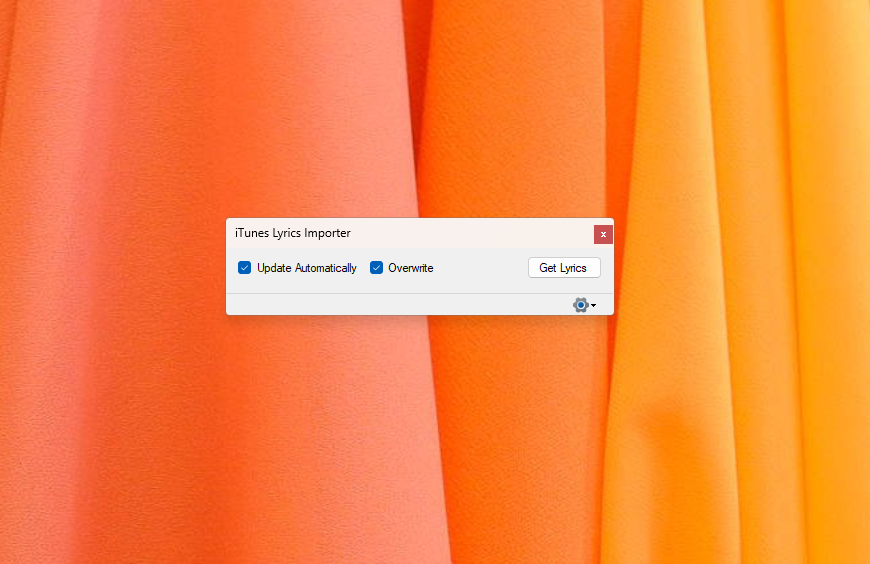
Some projects start as polished products. Others begin as practical tools built to solve one annoying problem. iTunesLyrics belongs in the second category, and that is exactly what makes it special.
At its core, iTunesLyrics is a Windows desktop app designed to fill in missing lyrics for songs in your local iTunes library. Behind that simple goal is a story of API changes, service shutdowns, and the work required to keep legacy software useful over time.
How It Started: A Utility for Real Music Libraries #
iTunesLyrics was created in a time when local music collections were still central to how many people listened. If your iTunes metadata was clean but your lyrics were empty, you had a frustratingly manual task ahead: search each song and paste lyrics one by one.
The app was built to automate that workflow. It reads your current iTunes tracks, searches for lyrics, and writes them directly into each song’s Lyrics field. It also supports both automatic updates and manual review, so users can choose speed or control depending on their library.
Deep iTunes Integration (And Why It Matters) #
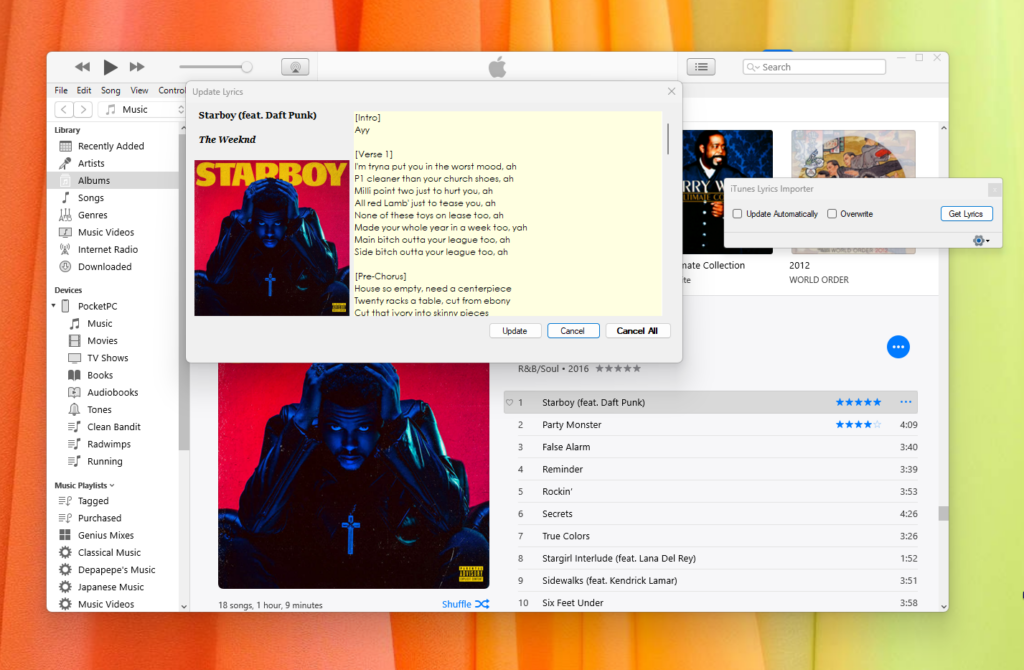
One of iTunesLyrics’ defining strengths is its direct integration with iTunes through COM automation. The app connects to a running iTunes instance, can work from selected songs, or process broader sets, and updates track metadata in place.
That means no export and import dance, no sidecar files, and no separate database to sync later. Lyrics are written exactly where users expect to find them: inside their iTunes library metadata, alongside artist, album, and title.
The Lyrics Wikia Era #
For a long time, iTunesLyrics depended on the LyricWiki / Lyrics Wikia ecosystem, which offered straightforward lyric lookup through SOAP services. At the time, it was a sensible choice: easy to query, broad catalog coverage, and practical for desktop automation.
This phase gave users a mostly seamless click and fill experience. Select tracks, run the updater, and watch lyrics populate across your library.
Deprecation Hit: When External Services Disappear #
Then came the familiar challenge of long-lived software: upstream services change and eventually disappear. LyricWiki’s SOAP service was deprecated, and integrations that relied on it could no longer function as before.
For projects like iTunesLyrics, this was not just a small bug. It was an existential break in the primary data pipeline. The app needed a new source, a new retrieval strategy, and enough flexibility to preserve the user experience.
The Move to Genius #
The modern evolution of iTunesLyrics is its migration to Genius. Instead of the old LyricWiki SOAP flow, the app now uses Genius search to find candidate songs, selects the best match, and retrieves lyrics from the song page content.
This transition required more than swapping one endpoint for another. It introduced a new lookup pipeline and a more resilient extraction process to handle modern web page structures. In practical terms, users still get the same promise: pick tracks, fetch lyrics, and update metadata, now powered by a maintained ecosystem.
Why This Project Still Matters #
iTunesLyrics is a reminder that software maintenance is real engineering work. The value is not only in initial development. It is in adapting when dependencies change, preserving workflows users rely on, and extending the life of tools that still solve real problems.
From local-library roots, through Lyrics Wikia’s rise and deprecation, to a Genius-based architecture, iTunesLyrics reflects a practical, user-first philosophy: keep music libraries usable, keep metadata rich, and keep shipping improvements even when the ecosystem shifts underneath you.
Great software is not just built once. It is carried forward.
Links #
Discover more from The Maker Shed
Subscribe to get the latest posts sent to your email.